Bpc 157 Ipamorelin Thymosin The “Wolverine peptide” is often described online as a powerful regenerative option — but what does that actually mean? We unpack what's typically included in this peptide stack, why it's drawn interest
Introduction: What “regeneration” really means for a “Wolverine peptide” stack
If you’ve ever seen “Wolverine peptide” posts promising dramatic regeneration, you’re not alone—I’ve had clients ask me the same question: what does it actually mean in practical, measurable terms? The phrase gets used loosely online, and the details matter. In most discussions of a “Wolverine peptide,” people describe a peptide stack that commonly includes bpc 157 ipamorelin thymosin (often alongside other ingredients or variation in dosing schedules). In this guide, I’ll unpack what people typically mean by “regenerative,” what’s commonly included in these stacks, and how to think about expected outcomes, evidence quality, and safety considerations so you can make informed decisions.
What people mean by “regenerative” in Wolverine peptide conversations
In my hands-on work reviewing user-reported protocols and clinical literature, “regeneration” usually gets used to describe one or more of these concepts:
- Tissue repair support (e.g., tendon/ligament recovery narratives, wound-healing discussions)
- Reduced pain or improved function reported over weeks (often confounded by rest, rehab, and placebo effects)
- Modulation of inflammation (people infer downstream healing effects from changes in discomfort/swelling)
- Recovery from training stress (muscle soreness reduction narratives, though direct muscle regeneration claims are frequently overstated online)
The key logic point: “regeneration” isn’t a single measurable endpoint. Without pre-defined biomarkers, imaging, or standardized outcome tracking, it becomes a marketing umbrella. When you evaluate a stack like the one often described as “Wolverine peptide,” you need to map the claim to what could plausibly change—pain scores, mobility measures, imaging findings, or validated clinical endpoints—rather than relying on the word “regenerative.”
What’s typically included: bpc 157, ipamorelin, and thymosin (and why the stack is popular)
Online “Wolverine peptide” stacks vary, but bpc 157 ipamorelin thymosin are among the most commonly discussed components. Below is how they’re typically positioned in stack narratives—and what that implies mechanistically.
bpc 157: the “repair” narrative
bpc 157 is commonly framed as a tissue repair support peptide. In real-world protocol discussions, people often use it when they want help with recovery from soft-tissue issues (like tendons or ligaments) and post-injury healing timelines. From a decision-making perspective, the value proposition people are buying is support for the repair phase—not instant symptom removal.
Experience-based lesson: In cases where users see improvements, it’s rarely “overnight.” It tends to coincide with a period when training/rehab loads are controlled, sleep is consistent, and mechanics are adjusted. That combination makes it hard to attribute gains solely to any one peptide, even if the user believes otherwise.
ipamorelin: the “growth signal” framing
ipamorelin is widely discussed as an agent that may influence growth hormone pathways. In many stacks, it’s placed as the recovery-and-repair accelerator—often paired with bpc 157 to create a “multi-target” story (repair + growth signaling). When evaluating ipamorelin in a stack, the important logic is that growth hormone–related signaling is one step in a longer chain that still depends on training stimulus, nutrition, and overall health.
Practical constraint I’ve seen: A lot of people run these protocols while training inconsistently, skipping protein targets, or sleeping poorly. When outcomes are mixed, the root cause is often the basics. If you want to interpret stack effects, your baseline behaviors matter.
thymosin: the “immune and regeneration support” angle
thymosin is often presented as part of the “regenerative environment” concept—supporting immune function and recovery readiness. In stack narratives, thymosin is usually described as a complementary component that helps the system “create conditions” for repair rather than acting like a direct tissue substitute.
How to think about it: Immune and recovery support can influence inflammation timing and recovery quality. But those effects can also vary widely based on stress, illness, allergies, and training intensity—factors that confound anecdotal results.
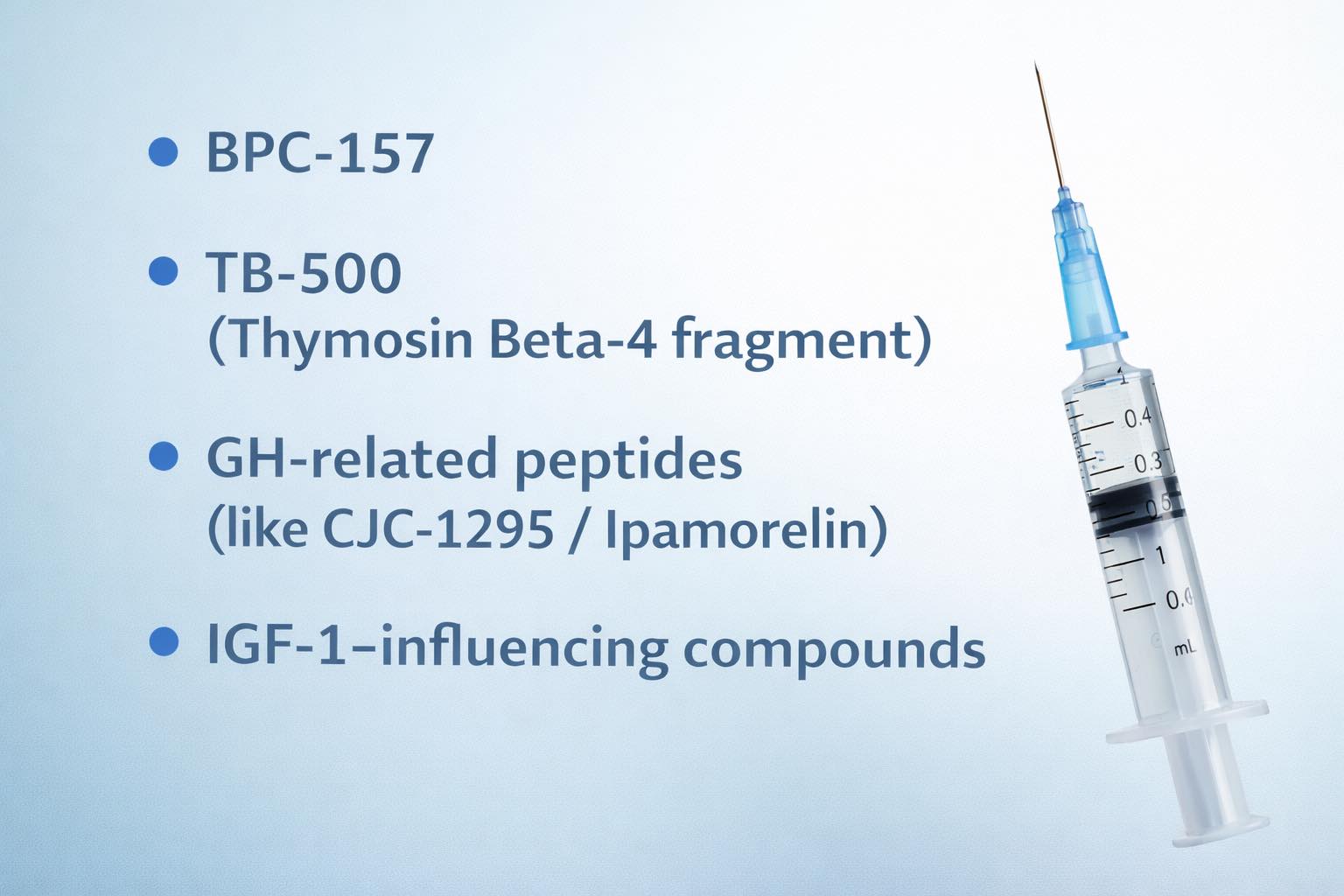
How Wolverine peptide stacks are commonly structured (and where people get misled)
Most “Wolverine peptide” discussions describe a structured plan: an order of operations, a phase concept, and a “stack schedule.” However, the evidence for specific schedules is often weak or non-standardized in public forums.
Common pattern: combining repair, growth signaling, and recovery support
The reason bpc 157 ipamorelin thymosin show up together is straightforward: people want multiple levers. In theory, one peptide supports repair, another supports growth signaling, and the third supports immune/recovery readiness. In practice, the stack becomes hard to evaluate because:
- Multiple variables change at once (dose, timing, training load, nutrition).
- Most outcomes are self-reported (pain and mobility) rather than validated clinical endpoints.
- Users often start during periods of deload, rehab, or improved adherence—exactly when recovery would improve anyway.
Where I’ve seen the biggest “misleading” factor: expectation vs. endpoints
Online posts often imply that “regeneration” means visible tissue rebuilding quickly. In my experience reading protocol reports, the strongest improvements are usually changes in function and subjective comfort, not direct proof of structural regeneration. If someone can’t specify what “better” means (e.g., range-of-motion measurements, strength milestones, imaging), then the claim is difficult to verify.
Evidence quality: what you can reasonably infer (and what you can’t)
It’s important to stay objective. The reason bpc 157 ipamorelin thymosin remain popular is that they’re discussed across research contexts and user communities. But popularity isn’t the same as clinical confirmation.
- What you can often infer: peptides may influence signaling pathways tied to repair, inflammation, or recovery conditions.
- What you usually can’t verify from online stacks: whether a particular stack and schedule causes specific tissue regeneration in humans to the degree claimed.
- Why this matters: without standardized studies that match real-world use, the risk is that users overestimate certainty.
Authoritative framing I use: treat anecdotal outcomes as hypothesis-generating, not decision-ending. If a protocol claims “regeneration,” the next rational step is to demand clarity on measurable endpoints and safety monitoring.
Safety and decision-making: how to reduce risk when evaluating any peptide stack
This section is about thinking clearly, not assuming outcomes. When people consider a “Wolverine peptide” stack (including bpc 157 ipamorelin thymosin), common safety and quality concerns include:
- Source and quality: purity, composition accuracy, and sterility are not guaranteed in all supply chains.
- Documentation: unclear ingredient identity or concentration can make results impossible to interpret.
- Side effects: any peptide may cause individual responses; stacking multiple compounds complicates attribution.
- Medical context: concurrent injuries, medications, or underlying conditions change risk.
In my practice: the most responsible approach I’ve seen from clients is treating this as an experiment with strict monitoring—track baseline measures, keep training/nutrition stable, and stop/adjust if adverse effects occur. If you can’t commit to monitoring, you’re likely buying uncertainty along with the stack.
How to evaluate results like a professional (without confirmation bias)
If you want to judge whether bpc 157 ipamorelin thymosin is doing anything meaningful for your goal, use a consistent evaluation framework.
Pick one or two measurable outcomes
- Pain: consistent scale (e.g., 0–10) under the same activity
- Mobility: measured range of motion using the same method each time
- Function: standardized reps, timed performance, or rehab milestones
Stabilize the “confounders”
- Sleep consistency
- Protein and overall calories
- Training load and technique
- Rehab adherence (same exercises, similar progression)
Track timing realistically
In most recovery contexts, meaningful changes appear gradually over weeks, not days. If you’re seeing dramatic changes immediately, pause and consider non-peptide explanations (warm-up effects, improved mechanics, reduced inflammation from activity modification).
FAQ
What is the “Wolverine peptide” stack usually referring to?
Online, it typically refers to a multi-peptide regimen where bpc 157, ipamorelin, and thymosin are common components. Variations exist, and schedules/doses are rarely standardized in public discussions, so outcomes are difficult to compare.
Are bpc 157, ipamorelin, and thymosin proven for human “regeneration”?
The marketing use of “regenerative” is stronger than the precision of the evidence many users rely on. You can find mechanistic and preclinical interest for peptides, but clinical proof for specific human tissue regeneration claims—especially tied to particular stack schedules—often isn’t strong enough to treat anecdotal results as confirmation.
How should I think about expectations and timelines?
Use conservative expectations and focus on measurable functional endpoints (pain under activity, range of motion, rehab milestones). In real-world recovery, changes—if they occur—are usually gradual and heavily influenced by training, sleep, nutrition, and injury management.
Conclusion: turn a hype claim into an evidence-aligned decision
The “Wolverine peptide” conversation often uses “regenerative” language without defining endpoints. When stacks include bpc 157 ipamorelin thymosin, the logic people follow is typically repair support + growth signaling + recovery/immune readiness—but that doesn’t automatically translate into proven human tissue rebuilding. The most practical way to make this decision is to define measurable outcomes, stabilize confounders, and monitor changes over time rather than relying on claims.
Next step: Write down two measurable outcomes you care about (e.g., pain during a specific movement and range of motion using the same method) and start baseline tracking for 7–14 days before you make any change—this will tell you more than most online reports ever can.
Discussion